
The Art of Designing a House for Art
One of the first questions I ask clients has nothing to do with bedrooms, square footage, or architectural style.
I ask whether there's anything in their lives that deserves architecture built around it.
Sometimes it's a view.
Sometimes it's an extraordinary oak tree.
Sometimes it's the way a family gathers around the dinner table.
And sometimes, it's an art collection.
Most homes are designed first, with the art arriving later. Paintings are hung after the furniture has been placed. Sculpture is fitted into whatever corner happens to be available. The collection adapts to the architecture rather than the other way around.
I've always thought there was a better approach.
A meaningful art collection deserves a seat at the design table from the very beginning.
Your Collection Says Something About You

When clients walk me through their collection, I'm rarely interested only in the individual pieces.
I'm interested in why those pieces found their way into their lives.
Why this artist and not another?
Was there a trip that led to its purchase?
Is there a work that your children have grown up with?
Are you drawn to landscape, abstraction, photography, sculpture, or contemporary installation?
The answers reveal something deeper than artistic taste.
They reveal how you see the world.
Over time, most serious collections become surprisingly personal. They are less an inventory of objects than a record of curiosity, experience, and memory. Like architecture itself, they tell a story.
Understanding that story allows the house to become something more than a backdrop.
It becomes part of the narrative.
Beyond Paintings on Walls
When people hear the phrase art collection, they often think of paintings.
Sometimes that's true.
Just as often, however, collections revolve around sculpture, ceramics, photography, furniture, textiles, books, or contemporary media. Each asks different questions of the architecture.
Sculpture, in particular, has always fascinated me.
As a student at Cornell, I spent countless afternoons wandering the university's sculpture garden. I wasn't simply looking at the sculptures. I found myself noticing how they changed the experience of the landscape around them. A single piece could make you slow down, alter your path, or suddenly become aware of light, shadow, or the scale of a meadow.
Good sculpture doesn't merely occupy space.
It transforms the experience of it.
I've carried that lesson into my architectural work ever since.
For clients fortunate enough to have meaningful landscapes, sculpture can become part of the architecture long before anyone reaches the front door. The conversation between house, landscape, and collection begins outside.
Designing the Journey

One of the greatest lessons private homes can borrow from museums has very little to do with display cases or gallery lighting.
It has to do with sequence.
Museums understand that the order in which we encounter things matters. A dramatic painting viewed at the end of a long gallery feels entirely different than the same painting encountered immediately upon entering a room. Curators think carefully about these relationships because they understand that one work influences the experience of the next.
Homes work the same way.
The walk from the front door to the living room, the turn at the stair, the moment a hallway opens into a larger volume—these are opportunities to create discovery, anticipation, pause, and surprise.
Sometimes the architecture should quietly step aside, allowing a remarkable piece to command complete attention.
At other times, the architecture and the artwork should strengthen one another.
This isn't about filling every available wall.
It's about choreographing a memorable experience of living with art.
A Conversation Between Art and Architecture
Clients occasionally ask whether a contemporary collection belongs in a contemporary house.
The answer is almost always no.
Or perhaps more accurately, not necessarily.
Some of the world's most memorable collections are compelling precisely because of the dialogue between the art and the architecture that surrounds it.
Peggy Guggenheim's extraordinary collection in Venice, for example, lives within an unfinished Renaissance palazzo. The contrast between the historic architecture and profoundly modern artwork heightens the experience of both.
The reverse can be equally successful.
Classical art inside contemporary architecture.
Contemporary art inside traditional architecture.
Modern art inside modern architecture.
There are no rules.
Only relationships.
The goal isn't stylistic consistency.
It's thoughtful curation.
Giving Art Room to Breathe
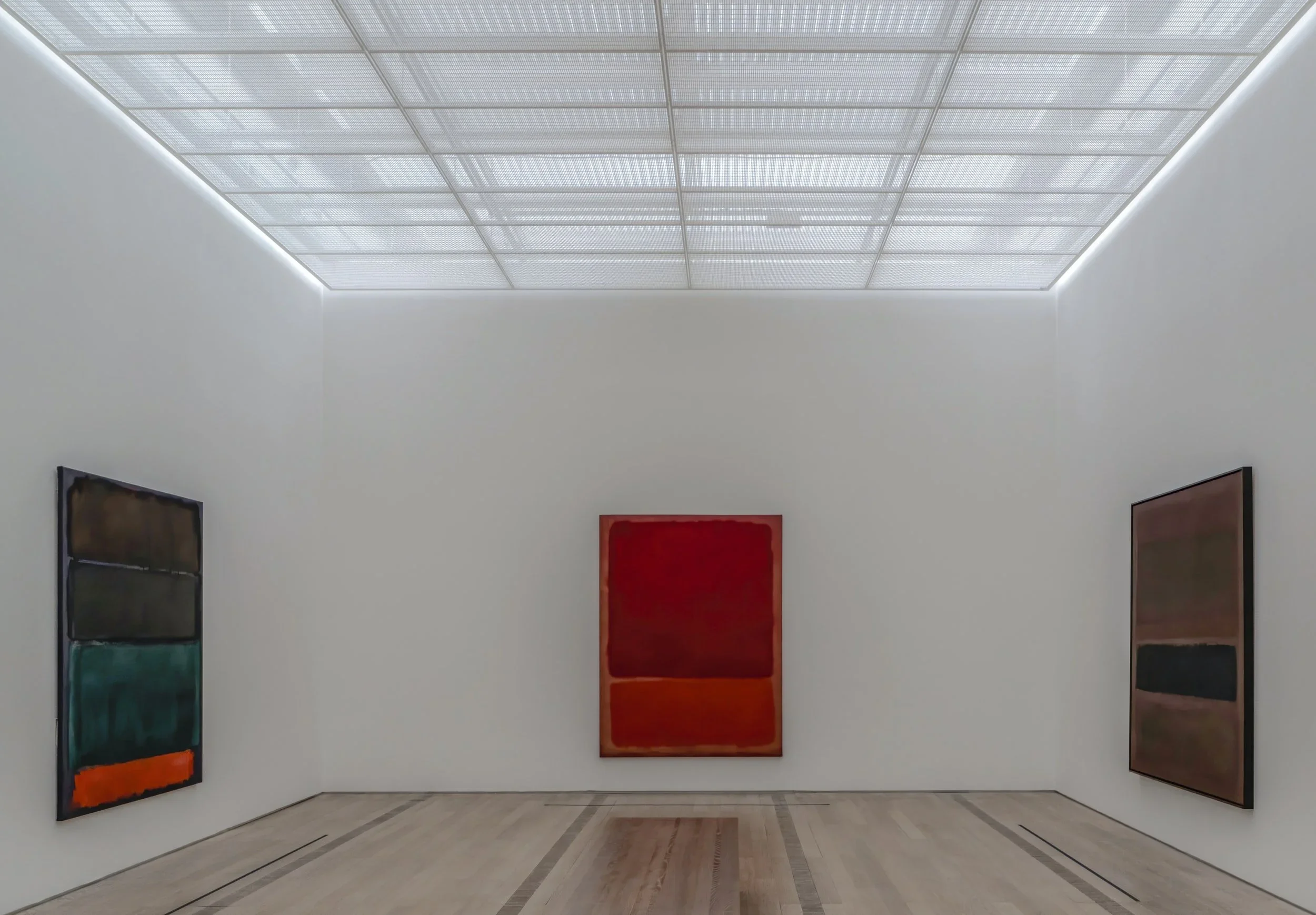
Architecture influences not only where artwork hangs, but how it is experienced.
Scale matters.
A monumental Frank Stella asks for very different proportions than a series of intimate Japanese woodblock prints. One may need to be experienced from across the room. The other invites quiet, close observation.
Distance matters.
Ceiling height matters.
The quality of daylight matters.
Even the pace at which someone moves through a room matters.
These are architectural questions every bit as much as artistic ones.
The goal isn't to make the room larger.
It's to make the experience richer.
Living With Art
One of the great differences between museums and homes is that museums ask us to visit art.
Homes ask us to live with it.
That's an entirely different relationship.
The painting you pass every morning on the way to make coffee becomes part of your daily rhythm. A sculpture glimpsed through a window changes with the seasons. A drawing quietly accompanies dinner conversations for years until you almost forget how extraordinary it is.
This is one of the great privileges of collecting.
Art stops being something you occasionally experience.
It becomes part of everyday life.
Good architecture should support that relationship rather than compete with it.
When the Collection Shapes the Architecture
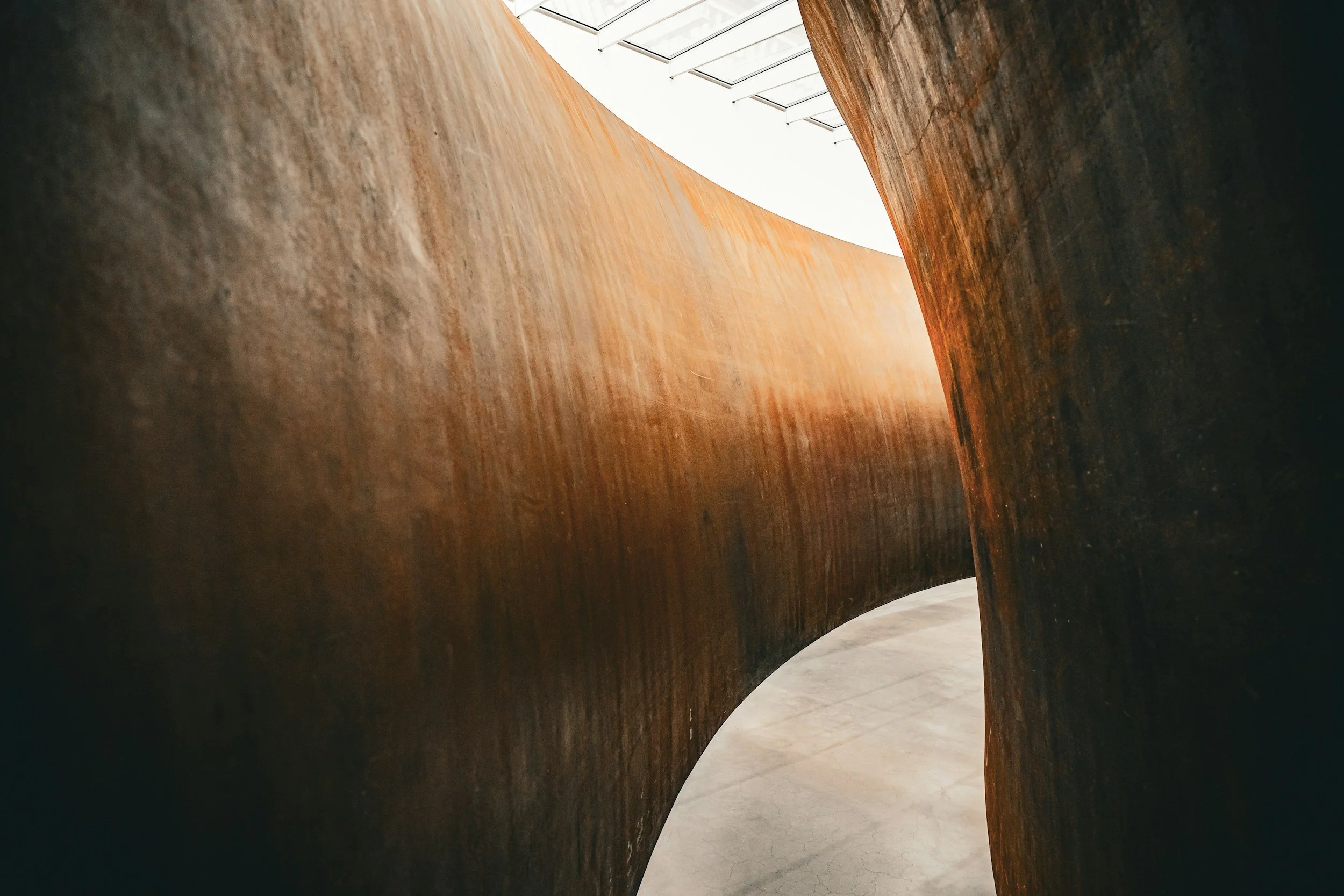
People often think of architecture as the container and art as the contents.
Sometimes that's true.
The most rewarding projects I've worked on, however, blur that distinction.
The collection begins influencing the architecture.
The architecture, in turn, changes the way the collection is experienced.
Each makes the other better.
Great architecture is often said to begin with a single, clear idea.
Sometimes that idea comes from the landscape.
Sometimes from the quality of light.
Sometimes from the way a family lives.
And sometimes, it begins with a remarkable collection.
When that happens, something special occurs.
The house no longer feels like a place where art has been installed.
It feels like a place where the architecture and the collection have always belonged together.
That's ultimately the opportunity.
Not simply to design a beautiful home with beautiful art inside it.
But to create a life in which architecture and art quietly enrich one another, every single day.