
The Science of Designing a House for Art
In my previous essay, The Art of Designing a House for Art, I wrote about the relationship between architecture and art—how a home can do more than simply display a collection. At its best, architecture becomes an active participant in the experience of living with art.
That conversation naturally leads to another question.
How do you protect a collection without turning your home into a museum?
Fortunately, you don't have to choose between preservation and enjoyment. Much of what makes a house wonderful for living with art also happens to make it an excellent steward of the collection itself.
As with many things in architecture, thoughtful design quietly solves several problems at once.
Light Is Both Friend and Foe
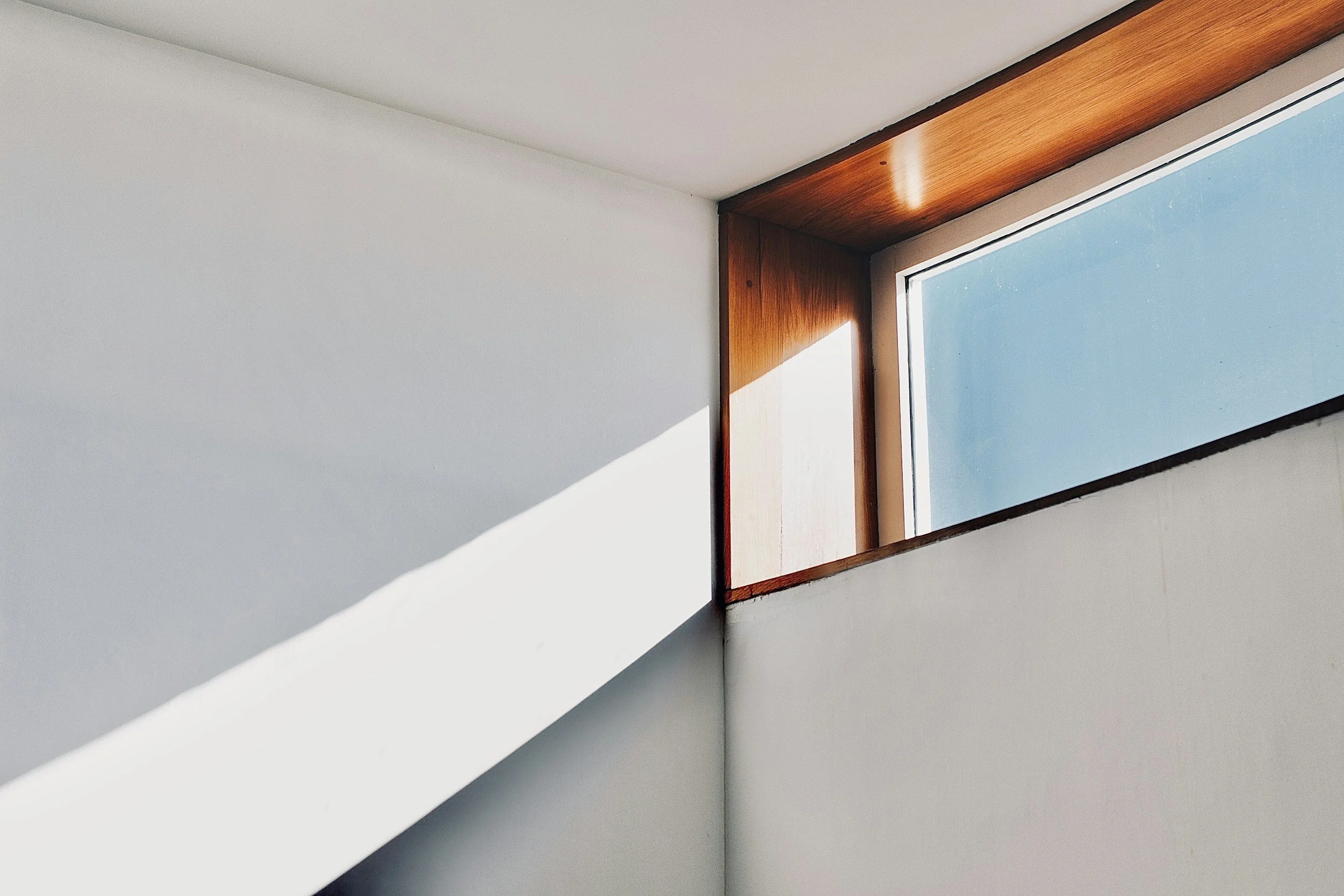
If there is one lesson every art collector eventually learns, it's that light is both essential and destructive.
Without light, we can't appreciate a painting, a sculpture, or a photograph. Yet over time, that very same light slowly degrades pigments, paper, textiles, and other delicate materials.
The question isn't whether to have light.
It's what kind of light, how much of it, and where it belongs.
This is one of the reasons I think architects should become involved early in the design of a home. Long before anyone begins selecting fixtures or window coverings, the architecture itself has an opportunity to shape the way light enters a space.
Architecture Should Do the Heavy Lifting

When people think about protecting artwork, they often jump immediately to specialized glass, motorized shades, or sophisticated lighting controls.
Those all have their place.
But I prefer to begin with architecture.
Can we orient a gallery wall away from direct sunlight?
Can a deep overhang block the summer sun while admitting softer winter light?
Can a courtyard, clerestory, or skylight introduce reflected daylight instead of direct sun?
Can the proportions of a room naturally soften the light before it ever reaches the artwork?
These architectural decisions don't announce themselves.
They simply allow the house to perform beautifully every day.
One of my favorite examples is Louis Kahn's Kimbell Art Museum in Fort Worth. Rather than flooding the galleries with direct sunlight, Kahn designed elegant vaulted skylights with sculptural aluminum reflectors that bounce daylight gently throughout the space.
The lighting solution became part of the architecture.
That's always the goal.
Less Can Be More
Conservators often think of light damage as cumulative.
The brighter the light—and the longer a piece remains exposed—the greater the long-term deterioration.
Fortunately, this isn't a difficult problem to solve.
Many collections don't need museum-level illumination throughout the day. Occupancy sensors, programmable lighting, and thoughtfully placed controls can keep spaces comfortably dim until someone enters the room.
The artwork receives dramatically less exposure while remaining ready to be enjoyed at a moment's notice.
Sometimes the best design solution isn't adding more.
It's knowing when less is enough.
Not All Light Is Created Equal

Artificial lighting deserves just as much attention as daylight.
Traditional incandescent, halogen, and fluorescent lamps all produce varying amounts of ultraviolet radiation and heat. Modern LED fixtures generate very little of either, making them the obvious choice for illuminating artwork.
Just as important, however, is color.
2Good lighting should reveal artwork honestly. High-quality fixtures with excellent color rendering allow paintings and sculpture to appear much as the artist intended, without introducing unwanted color shifts.
Protecting the work is important.
So is seeing it beautifully.
Protection Can Be Invisible
Many of the most effective conservation strategies are almost impossible to notice.
Museum-quality glazing can filter nearly all harmful ultraviolet radiation while protecting artwork from dust, fingerprints, and accidental damage. Anti-reflective glass and acrylic can virtually disappear, allowing the artwork—not the frame—to command attention.
Windows deserve the same level of consideration.
Today's insulated glazing systems can be specified with coatings that reduce ultraviolet transmission, improve energy performance, and maintain an exceptionally neutral color balance.
That last point matters more than many people realize.
Glass doesn't simply determine how much light enters a room.
It influences how every color inside that room is perceived.
A carefully chosen glazing system protects both the artwork and the experience of seeing it.
Stability Matters More Than Perfection
Light is only one part of the equation.
Temperature and humidity have an equally significant influence on the longevity of many collections.
Paintings, works on paper, photographs, textiles, and mixed-media pieces all respond to changes in their environment. Materials expand and contract at different rates, placing stress on pigments, adhesives, canvas, and wood.
Interestingly, the greatest threat is often not a room that's slightly too warm or slightly too cool.
It's constant fluctuation.
Modern HVAC systems are remarkably capable of maintaining stable temperature and humidity throughout the year, quietly protecting both the collection and the comfort of the people living with it.
Like so many good building systems, the best ones are rarely noticed.
Living With a Collection
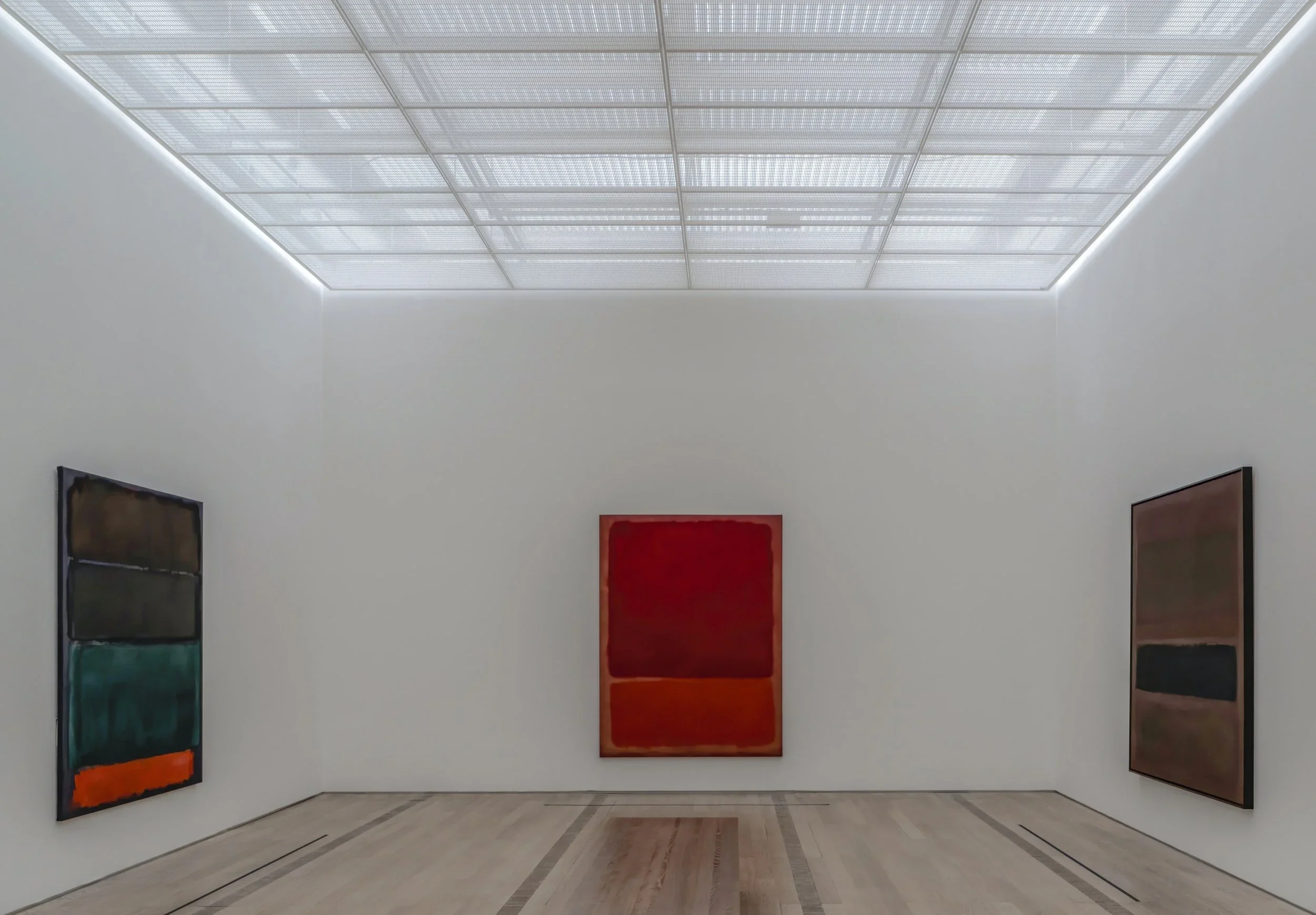
Not every piece needs to be on display all the time.
Many collectors rotate artwork throughout the year, allowing different pieces to become part of daily life while limiting the cumulative exposure of more delicate works.
For larger collections, climate-controlled storage within the home can become surprisingly valuable. Rather than hiding artwork away in a warehouse, these rooms function almost like personal libraries—places where the collection remains accessible, organized, and ready to be enjoyed again.
The goal isn't simply preservation.
It's stewardship.
Quiet Confidence
Security has advanced enormously over the past two decades.
Discreet sensors, cameras, environmental monitoring, and smartphone alerts can all be integrated into a home without allowing technology to dominate the experience of living there.
Like lighting, climate control, and glazing, the best security systems tend to disappear into the background.
You notice their absence only when they're missing.
Stewardship Through Design
Clients occasionally ask whether designing for an art collection means making a home feel more like a museum.
I've found the opposite to be true.
The best homes for art don't feel institutional.
They feel calm.
Thoughtful.
Intentional.
The architecture quietly protects the collection while allowing it to become part of everyday life.
In the end, that's what good design does.
It solves problems before they become visible.
The homeowner simply experiences a house that feels comfortable. The collector enjoys a collection that continues to look its best. Visitors notice the quality of the light without ever wondering why it feels so natural.
That's architecture at its best.
Not drawing attention to itself.
Quietly making everything around it better.